
Day Trading Forex: Setups, Sessions, and Risk Rules
Day trading forex rewards specialists, not generalists. You pick one pair, one session, one setup, and execute it until you have hundreds of trades worth of data. This guide gives you the session map, four setup archetypes, and the risk framework that keeps you in the game long enough to compound.
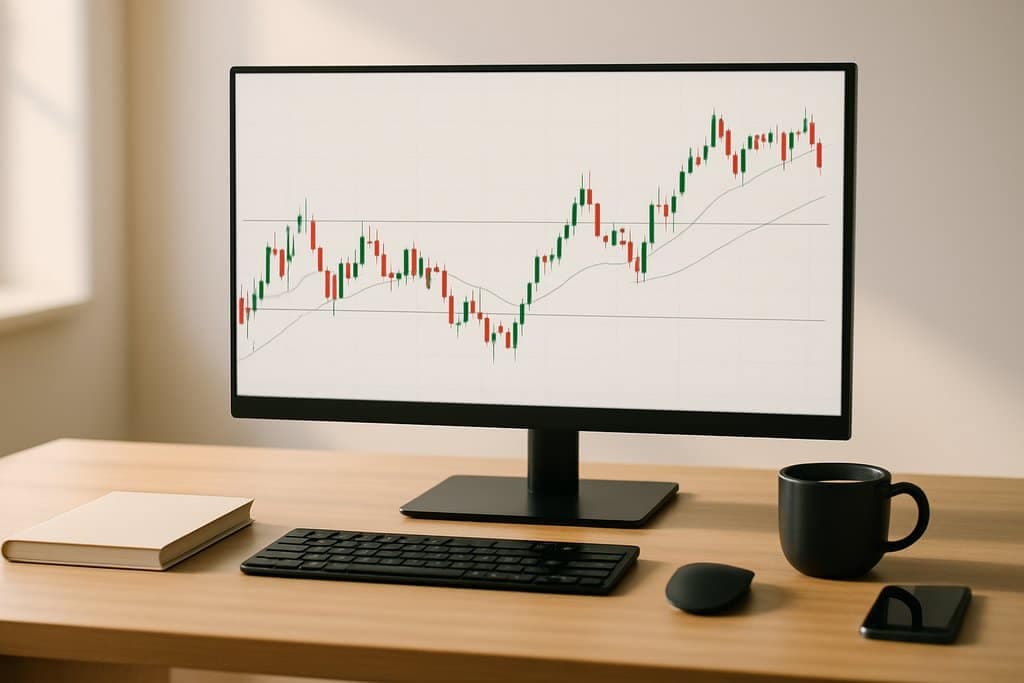
Day trading forex rewards specialists, not generalists. You pick one pair, one session, one setup, and execute it until you have hundreds of trades worth of data. This guide gives you the session map, four setup archetypes, and the risk framework that keeps you in the game long enough to compound.
What makes forex day trading different
You open and close positions within the same day to capture intraday moves without overnight risk. The FX market runs 24 hours across global sessions, so you align your window to your schedule and volatility preference. Majors like EUR/USD, GBP/USD, and USD/JPY offer the best liquidity and tightest spreads — essential when entries and exits are frequent and you want costs to stay below your edge.
The market is decentralized and continuous, which means fewer gaps than equities. That does not make it easier. Leverage amplifies outcomes both ways. News can reprice pairs in seconds. Spreads widen during illiquid windows and around releases. Success depends on timing, risk control, and consistent execution — not prediction.
Sessions and pair selection
| Session | UTC hours | Best pairs | What to look for |
|---|---|---|---|
| Tokyo | 00:00-09:00 | USD/JPY, AUD/USD, NZD/USD | Cleaner ranges, technical setups |
| London | 07:00-16:00 | EUR/USD, GBP/USD, EUR/GBP | Highest volatility, breakouts |
| London/NY overlap | 12:00-16:00 | EUR/USD, GBP/USD | Peak liquidity, momentum setups |
| New York | 13:00-21:00 | USD pairs broadly | Continuation or reversal of London moves |
The London open and the London/New York overlap usually produce the best action for EUR and GBP pairs. Tokyo hours suit USD/JPY and AUD pairs with cleaner ranges. Pick one window. Master it. Then expand.
Drivers and execution quality
Scheduled catalysts. CPI, NFP (US Bureau of Labor Statistics posts at bls.gov), PMI, central bank decisions. Know what is on the calendar each day. Either trade them with a plan or stay flat.
Unscheduled drivers. Political headlines, geopolitical shocks, central banker comments. You cannot plan these. You can size for them.
Execution quality. Spread plus slippage on a 15-pip target eats heavily. Learn the order types your broker supports (market, limit, stop, OCO) and use them properly.
Four setup archetypes
Pick one. Make it your bread and butter. Add a second only after the first runs profitably for two months.
1. Momentum breakout at session opens
Watch for a break of the Asian or pre-London range with follow-through in the first 60 to 120 minutes of London. Wait for a 5 or 15-minute close beyond the range high or low, then enter in the direction of the break with a stop beyond the opposite side. A macro catalyst or higher-timeframe trend improves odds.
2. Mean reversion in defined ranges
When price oscillates between intraday levels like VWAP, prior day high or low, or a daily pivot, fade moves near range extremes and aim for rotation toward the middle. Keep stops tight and invalidation clear. The killer is mistaking a true breakout for a range extreme.
3. Trend pullback with higher-timeframe alignment
Align 5 or 15-minute charts with a 1-hour trend. If 1H is up and volatility supportive, buy pullbacks to moving averages, prior structure, or anchored VWAP with stops below the last swing. Reduces whipsaw compared to chasing breakouts at session opens.
4. News volatility capture
During major releases, spreads widen and volatility spikes. Two approaches: wait for the first impulse and trade the secondary move once spreads normalize, or pre-define a small scalp with tight risk and a time-based exit. Automation enforces rules and avoids impulsive overrides during the burst.
Risk management as a business
Your edge can be small. Disciplined risk management keeps you trading long enough to realize it.
Position sizing
Risk 0.25 to 0.75 percent per trade. Convert account risk into lot size using stop distance. A 50-pip stop with 0.5 percent risk on a 10,000 account means roughly 1 USD per pip, which is 0.10 standard lots on EUR/USD.
Stop placement
Two valid methods. Structure-based: beyond the last swing or outside the range. Volatility-based: a multiple of ATR (typically 1.0 to 1.5x the 14-period ATR on your entry timeframe). Pick one and use it consistently.
Expectancy over win rate
A 45 percent win rate can be strong if winners average 1.8R and losers average 1R. Take profits at logical levels. Cut losers fast.
Correlation awareness
Long EUR/USD and long GBP/USD both express USD weakness. Stacking correlated positions doubles your exposure to one macro view. Cap total USD exposure across all positions.
Workflow and automation
A robust intraday workflow: daily plan, defined watchlist, pre-marked levels, alerts at trigger zones, hard rules that prevent overtrading. Automation is a force multiplier in a market that rewards speed and discipline.
Examples that run cleanly on Obside:
- "Alert if RSI crosses 70 on EUR/USD and MACD turns bearish on the 5-minute chart."
- "Short EUR/USD on a close below the London low with volume above the 20-day average. Stop 1.2 ATR. Partial at 1R. Trail at 2 ATR."
- "Close all intraday positions by 20:45 UTC to avoid rollover risk."
- "Stop trading for the day after three losing trades or a 1.5 percent account drawdown."
Validate in seconds with backtesting, then deploy with live execution through your broker.
A focused plan to start day trading forex
| Phase | Duration | Action |
|---|---|---|
| Pair and session | Week 1 | Pick one liquid major + one session (e.g., EUR/USD during London/NY overlap) |
| Define one setup | Week 2 | Write the entry, stop, target, sizing in a one-page spec |
| Backtest | Week 3 | Collect 50-100 historical trades. Estimate expectancy and spread sensitivity |
| Forward test | Weeks 4-7 | Demo or live with 0.1 lot. Adjust only what the data proves broken |
| Automate guards | Week 8 | Create alerts for setup triggers and macro days. Daily loss limit |
| Scale | Months 3-6 | Increase risk per trade gradually from 0.25% to 0.5%. Recheck slippage at each step |
| Review | Weekly | Tag every trade. Plan vs deviation. Refine rules monthly |
Two concrete intraday templates
EUR/USD London momentum breakout
Mark the Asian session high and low. As London opens, watch for a 5-minute close beyond the high with above-average volume. Enter on the next candle if price does not snap back. Stop below the Asian low or 1.2 ATR. Partial at 1R. Trail at 2 ATR to capture extension into the New York overlap.
USD/JPY Asia range rotation
During Tokyo hours, USD/JPY often respects defined ranges when news is light. Identify the prior day's value area and intraday VWAP. Fade stretches of about 1 ATR beyond VWAP into prior resistance or support. Small risk. Quick targets back to VWAP. Halt trading if a high-impact Japan or US announcement is due. Resume once spreads normalize.
Benefits and honest considerations
Liquidity and 24-hour access let you trade when you are most focused. Tight spreads on majors support strategies that rely on small but frequent profits. The market responds to both technical levels and macro news, allowing specialization.
The risks: psychological pressure compounds when decisions come every few minutes. Overtrading can erase a good week in one bad session. Costs matter at intraday cadence — small slippage or widening spreads can flip an edge. The solution is a repeatable plan, discipline, and automation that removes guesswork. Test in a trading simulator before risking real capital.
Ready to trade your plan instead of your mood?
Pick one pair, one session, one setup. Describe it to Obside Copilot, validate it with instant backtesting, and run it live through your broker with sizing, stops, and exits enforced automatically.
Create your free Obside account and ship your first forex automation today.
Educational content only. This is not investment advice. Trading involves risk, including possible loss of capital.
FAQ
The London session and the London/New York overlap typically offer the best combination of liquidity and volatility for EUR and GBP pairs. USD/JPY and AUD pairs perform well during Tokyo hours. Test your setup across sessions and stick to the window with stable results.
Related articles
Try Obside on your portfolio
Connect your broker and automate your strategy with a prompt.
Get started